

Key Takeaways
- It’s common for one spouse to need more care than the other, and that’s okay.
- Assisted living can offer personalized support while honoring your loved one’s independence.
- The spouse at home can stay deeply involved through regular visits and family-centered programs.
- Honest, supportive conversations can help couples navigate this decision together.
- Touring a community together can help both spouses better understand their options.
When One Spouse Needs More Support
Few moments in a marriage feel as complicated as realizing your paths forward may look a little different. One of you may be thriving at home, while the other needs a level of daily care that’s hard to manage alone. It’s a moment that can bring up guilt, worry, and deep love all at the same time.
When only one spouse needs assisted living, it doesn’t mean the relationship changes. It just means the support around it does. Many families navigate this exact situation, and with the right community, both of you can feel supported and connected. Exploring communities to better understand what your options are can help you navigate your decision.
What Assisted Living Can Offer Your Loved One
Personalized Care & Daily Support
One of the benefits of assisted living is that care is tailored to each person’s needs. Your loved one gets a care plan built around their specific needs, whether that’s help with daily tasks, managing medications, or simply having someone nearby throughout the day.
The goal is to have support when it’s needed while leaving room for independence. That balance can make a real difference in how your loved one feels day to day. They get to keep living on their own terms with a caring team nearby.
Connection, Belonging, & Purpose
Daily life in a senior living community is about more than just care. It’s about feeling like you belong somewhere. Social programs, group activities, and shared spaces give residents opportunities to form friendships and stay engaged with life around them. Taking a look at the monthly activity calendar can give you a feel for what that daily rhythm looks like.
Emotional and spiritual well-being matter just as much as physical health. Families are included in that support, too, so you can stay connected throughout the process.

How to Stay Connected
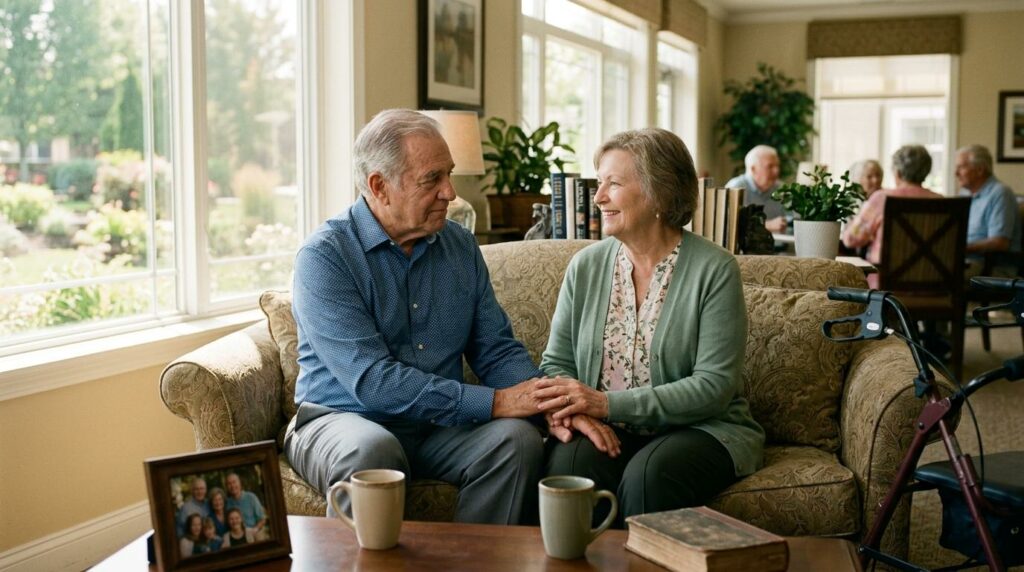
One of the biggest fears families face is the worry that moving into assisted living means growing apart. But regular visits can help couples stay connected, and many communities actively welcome family involvement in daily life. You can share meals, join activities, or simply sit together and enjoy each other’s company.
The team in a senior living community is there to support both of you, not just the spouse receiving care. Staff who understand your situation can help you stay informed, involved, and reassured. Your relationship doesn’t have to pause because the address changes. For some couples, having a professional team help with daily care may also ease some of the stress that comes with caregiving at home.
How to Talk to Your Spouse
Start with Care
When it’s time to have this conversation, start with what matters most. Share your love for them and your desire to see them comfortable and cared for. It’s natural for your spouse to feel afraid or resistant. Allow them space to voice their concerns
Try focusing on what this change can bring rather than what it feels like you’re leaving behind. Comfort, connection, and care are worth talking about. When your spouse feels heard and respected in the conversation, it can create more space to explore options together.
Take the Decision Step by Step
You don’t have to figure everything out in one conversation. Take your time, gather information, and when both of you are ready, consider touring communities together. Seeing a warm, welcoming space in person can give you both a better sense of what daily life could look like. Browsing floor plans and virtual tours ahead of time can also help set expectations and spark conversation.
Bringing other family members into the process can also ease the weight of it. Adult children, close friends, or even a trusted advisor can offer perspective and support. This is a family decision, and it’s okay to lean on the people who love you both.
Finding the Right Next Step
Finding the right assisted living community can help your loved one receive the support they need while keeping you connected and involved. Take your time, ask questions, and choose an option that feels right for both of you.
At Boden Senior Living, care is built around each resident’s needs and preferences. We offer customizable lifestyle options, engaging activities, and a supportive team. It’s a place where families can explore what senior living could look like for their loved one.
Reach out to schedule a tour and see for yourself what that support can feel like.